Introduction: The Soul of the Merauke Rainforest
In the prehistoric and silent depths of the Merauke rainforests in Papua, Indonesia, a biological miracle is occurring. Consequently, the humidity feels like a physical weight, the canopy acts as an impenetrable ceiling, and the soil remains a complex matrix of acidic peat. Within this extreme environment, a specific group of trees—primarily Aquilaria filaria and Gyrinops ledermannii—performs a feat of survival. As a result, they produce the world’s most coveted aromatic substance: Maroke Agarwood.
Known among elite collectors as “The Midnight Sun,” Oud Maroke” is not merely a fragrance; however, it is also a hard asset and a spiritual anchor. For the uninitiated, it may appear as a piece of decayed wood. On the other hand, for the chemical analyst, it is a resinous treasure born of biological battle. This article serves as the definitive technical and olfactive analysis of Maroke Oud, establishing the industry standards for purity and global trade.
The Genesis of Maroke Agarwood Resin
The story of Oud Maroke begins with environmental stress. Unlike plantation-grown agarwood that is artificially inoculated, wild Maroke is the result of a natural fungal infection. Specifically, this infection is typically caused by the Phialophora parasitica fungus. In the swamps of Southern Papua, trees face constant microbial pressure and frequent flooding. Therefore, when a tree is wounded, it initiates a biochemical defense mechanism.
This defense saturates the heartwood with a dense, aromatic resin to wall off the infection. Because Papua’s environment is so extreme, this resinification process is slow and incredibly dense. Moreover, the resin does not form in thin layers. Instead, it forms in deep, saturated pockets. This ecological factor explains why Maroke Agarwood is scarce, heavy, and unusually complex. Furthermore, most trees do not survive long enough to produce high-density resin; hence, the jungle eliminates them first.
Botanical Distinction of Maroke Agarwood
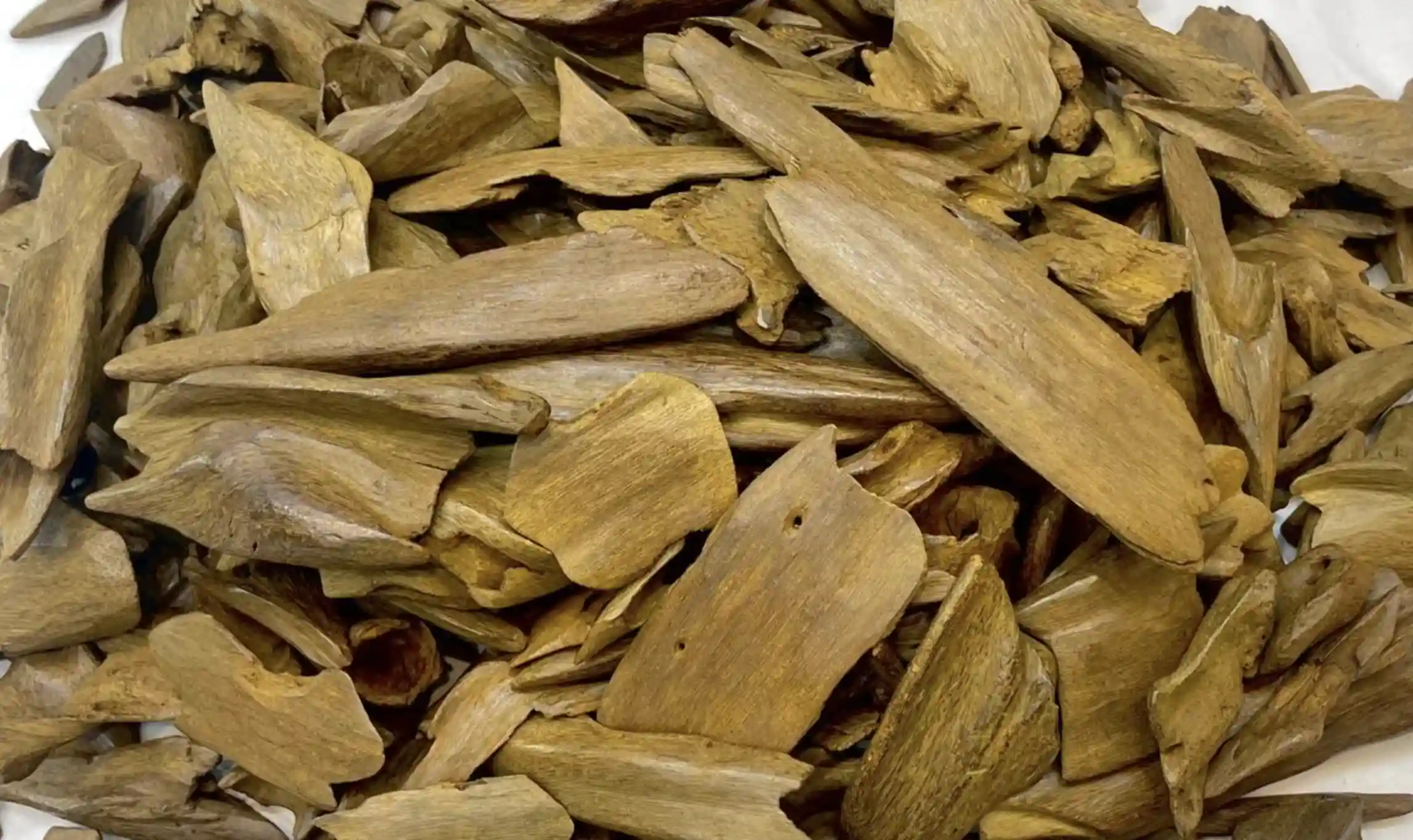
A critical misunderstanding in the Oud market is the assumption that all agarwood belongs to the Aquilaria malaccensis species. In contrast, true Maroke Agarwood chips is botanically distinct. It originates from two primary sources that define its unique chemical fingerprint.
A. Aquilaria filaria Species
This species is the backbone of the Papua trade. It is uniquely adapted to the swampy, acidic soils of the region. Chemically, A. filaria produces a higher concentration of heavy aromatic molecules, particularly oxygenated terpenoids. Consequently, this results in the “earthy” and “leathery” profile that defines Maroke Agarwood.
B. Gyrinops ledermannii Genus
The Gyrinops genus is the “secret weapon” of the Papuan forest. It offers a unique chemical fingerprint rich in chromones and sesquiterpenes. Therefore, it provides a “cool” and almost camphorous top note. When collectors speak of Maroke Agarwood feeling “intimidatingly complex,” they are often experiencing the influence of Gyrinops.
Olfactive Architecture of Maroke Agarwood
If you are accustomed to the floral sweetness of Thai Oud, Maroke Agarwood will be a shock to your sensory system. It does not flirt; instead, it grounds the wearer. Its olfactive pyramid is a journey into darkness and light.
The Mineral Opening: The first heat release produces a dark mineral note. It is reminiscent of petrichor—the smell of wet earth after rain.
The Leathery Heart: After 15 minutes on charcoal, the aroma shifts significantly. The cool opening gives way to a warm bitterness resembling unsweetened cocoa and aged tobacco.
The Meditative Finish: Finally, a subtle sweetness appears. It is a dry, forest-honey note that is restrained and sophisticated.
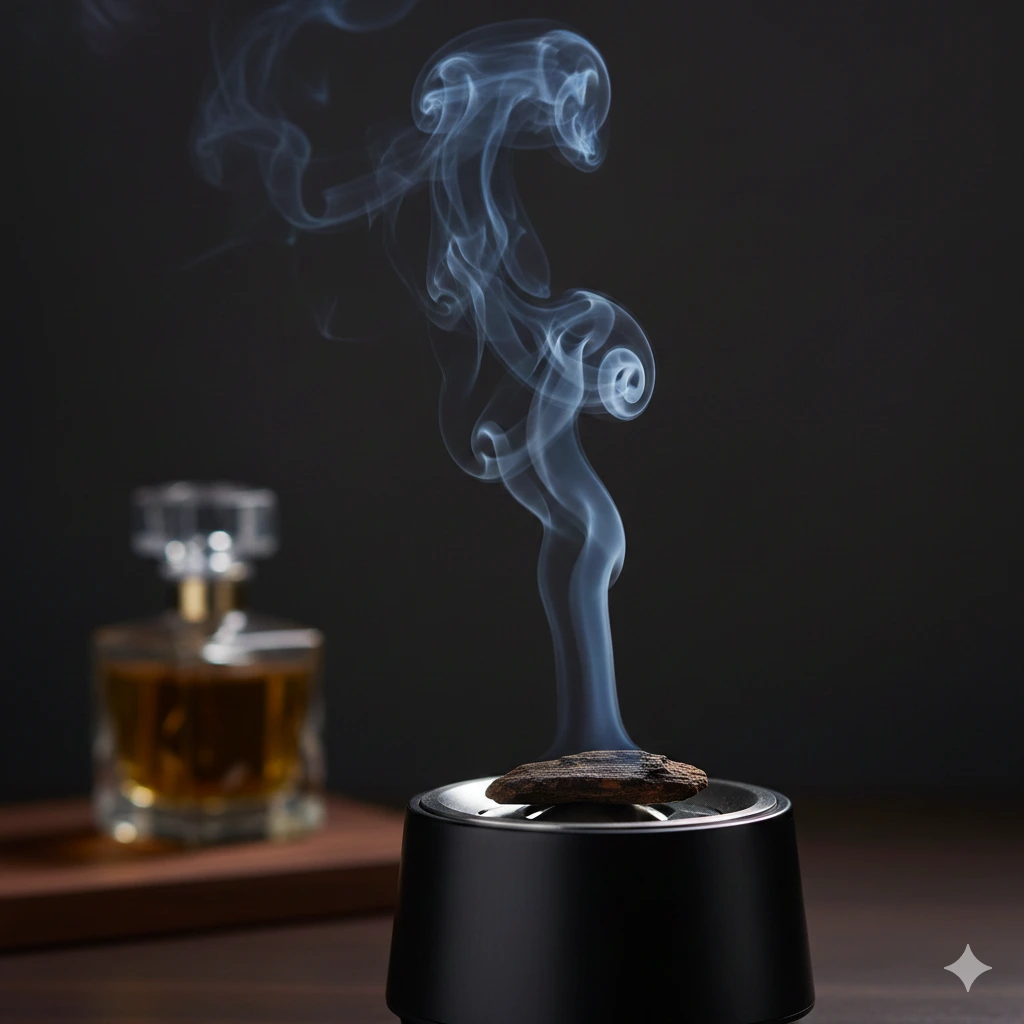
In addition to its scent, the technical persistence of Maroke Agarwood Price is remarkable. On a professional sub-ohm heater at 180°C, a single high-grade chip can evolve for over 60 minutes. As a result, it provides a consistent, non-acrid smoke that fills a space with authority.
Maroke Oud as an Investment Asset
Why has Maroke Agarwood become the obsession of the global elite? It is a combination of cultural prestige and economic scarcity. Wild Maroke is a finite resource. Because CITES regulations are tightening and harvest quotas are decreasing, the cost of extraction has skyrocketed.
Over the last five years, high-grade Oud wholsale has seen a year-on-year value increase of 15% to 20%. Therefore, it is widely considered a “recession-proof” asset. For instance, in the royal courts of Riyadh and the penthouses of Manhattan, owning “Sinking Grade” Maroke is a symbol of absolute exclusivity.
The Masantara Oud Verification Protocol
The tragedy of high demand is the rise of counterfeits. “Black-shack” (painted wood) and lead-loading are rampant. Consequently, Masantara Oud has addressed this by implementing a scientific verification protocol for Maroke Agarwood Supplier.
The 4-Tier Verification Process:
1. Scanning: Every piece is scanned. Authentic Maroke Agarwood has 0% lead or mercury.
2. Density Testing: We calculate the specific gravity. True Sinking Grade must exceed 1.0 g/cm³.
3. Loupe Inspection: We examine the vascular system. In authentic Maroke Agarwood, resin veins follow chaotic natural lines.
4. Smoke Analysis: Genuine chips produce a thin, blue-white vapor. In contrast, fakes produce thick, grey, or acrid smoke.
Grading Standards for Maroke Agarwood
In the wholesale market, Oud Maroke is categorized by resin saturation. Understanding these grades is essential for investors.
| Grade | Density | Physical Property |
| Super King | > 1.05 g/cm³ | Sinks instantly; jet-black streaks. |
| A Grade | 0.85 – 0.95 g/cm³ | Hovers or sinks slowly; high resin. |
| Double Super | 60% – 75% Saturation | Marbled appearance; deep brown. |
| Super Grade | 40% – 55% Saturation | Visible wood fibers with resin. |
Furthermore, the “Sinking” status is the gold standard. This status indicates that the wood is so saturated with oil that it has lost its natural buoyancy.
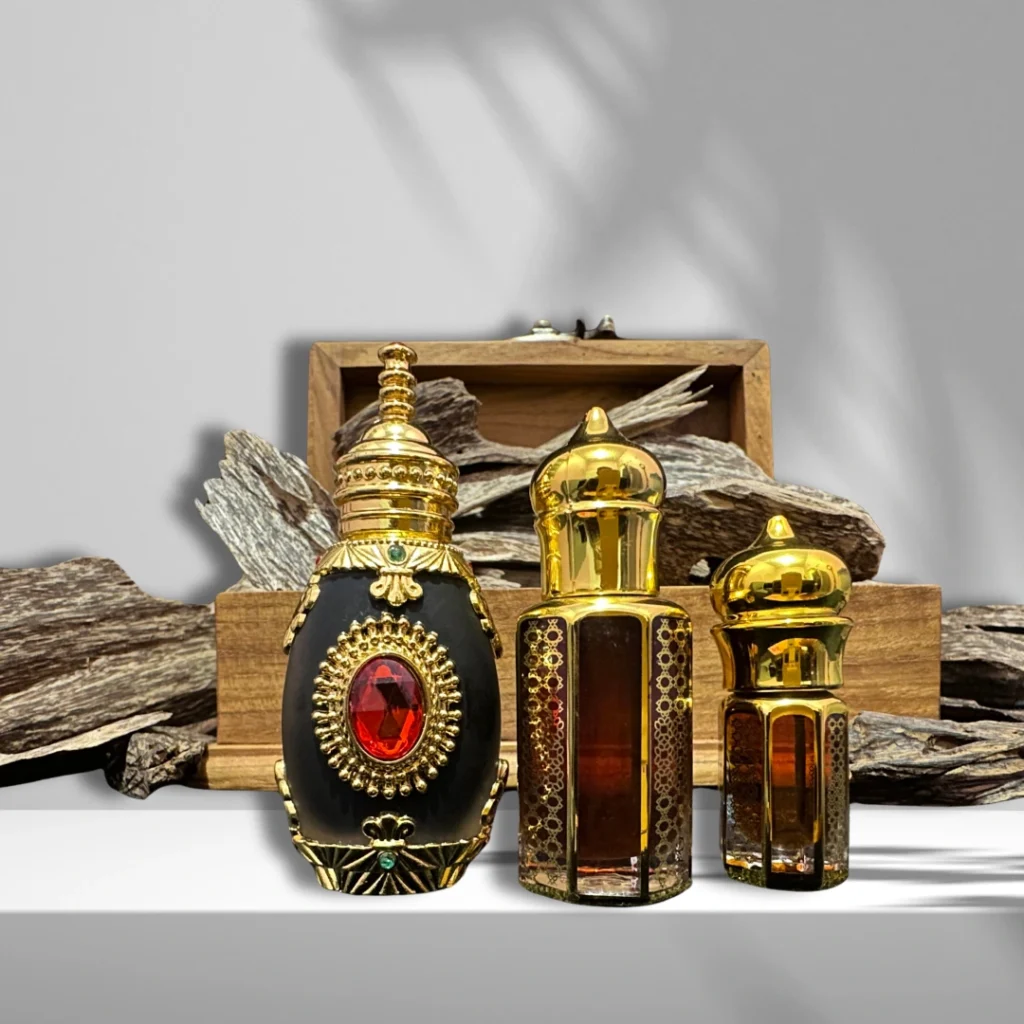
Extraction Science of Maroke Oud Oil
Traditional hydro-distillation is the enemy of Maroke Agarwood Oil . Boiling wood at 100°C+ for days destroys delicate top notes. Therefore, Masantara Oud utilizes Low-Temperature Vacuum Distillation.
By reducing pressure to 0.1 mbar, the oil vaporizes at a lower temperature. Consequently, by maintaining exactly 65°C, we prevent thermal degradation. The result is a “Full-Spectrum” oil that smells exactly like the raw Maroke Agarwood wood chip—mineral, leathery, and ancient.
Sustainability of Agarwood Maroke Trade
The future of the “Midnight Sun” depends on ethical trade. Masantara Oud operates under strict Indonesian forestry regulations. Every legal shipment of Maroke Agarwood requires:
Traceability: Confirming the harvest zone in Papua.
CITES Permits: Validating sustainable quotas.
Legal Documentation: Ensuring international resale value.
In addition to legal compliance, ethical harvesting ensures that the Papuan jungle remains a source of “liquid gold” for future generations.
Global Demand for Oud Maroke in Perfumery
In high-end French perfumery, Maroke Agarwood oil is used as a natural fixative. Because of its heavy terpenoid structure, it stabilizes volatile top notes like Jasmine. It adds a “soul” to a fragrance that synthetic molecules cannot achieve. Moreover, niche perfume houses in London and Paris are increasingly seeking wild-sourced **Maroke Agarwood** to differentiate their private blends.
How to Use Oud Maroke in Traditional Settings
For the best experience, Maroke Agarwood should be heated, not burned. While charcoal is traditional, electric burners allow for better temperature control. For example, starting at 150°C and slowly increasing to 210°C allows you to experience every layer of the scent profile. This slow heating process highlights the “Midnight Sun” effect, where the dark wood radiates a warm, complex aroma.
FAQ: Deep-Dive into Maroke Agarwood
What makes Maroke Agarwood uniquely “earthy”?
The earthiness is a result of selinene derivatives found in Aquilaria filaria. These compounds mimic the scent of damp moss and mineral soil.
Why is Masantara Oud the authority on Maroke Agarwood?
Because we bridge the gap between forest harvesting and scientific quality assurance. We use scanning and vacuum distillation to ensure 100% purity.
Is wild Maroke Agarwood disappearing?
Yes. Due to high demand and difficult terrain, wild stocks are dwindling. Therefore, acquiring authentic pieces now is a strategic investment.