 Worldwide Shipping Available via DHL Express
Shipment Documentation & Partnership
International agarwood trade carries real legal and logistical complexity. This page documents exactly how Masantara Oud manages that complexity — the permits, the documentation, the workflow, and the systems that protect buyers and ensure every shipment arrives legally, completely, and as specified.
01 — Trade Risk Reality
TRUST IN GLOBAL TRADE:
WHY DOCUMENTATION IS THE PRODUCT
When a buyer transfers a significant sum to a supplier on the other side of the world for a commodity they cannot inspect in person, the transaction is not primarily about the product. It is about the documentation that proves the product is what it claims to be, that the trade is legal, and that the shipment will clear customs at the destination. In the agarwood trade, where CITES regulation, varying national import requirements, and a documented history of fraud and quality misrepresentation all intersect, documentation is not a formality — it is the foundation of every trustworthy transaction.
This page provides a complete and factual account of how Masantara Oud handles international shipments: the permits required, the documents produced, the workflow from order to delivery, and the systems that ensure a buyer in Saudi Arabia, Japan, the United States, or Europe receives exactly what was agreed — legally cleared, fully documented, and correctly graded.
02 — Legal Framework
WHY AGARWOOD TRADE REQUIRES
METICULOUS DOCUMENTATION
Agarwood occupies a legally sensitive position in international trade that most commodity exports do not. The genus Aquilaria — encompassing all agarwood-producing species of commercial significance — is listed on CITES Appendix II, the international treaty mechanism that regulates trade in species that are not currently threatened with extinction but could become so if trade were not controlled. This listing means that agarwood is not prohibited in international commerce, but every export and import requires formally issued permits, traceability documentation, and verification that the material originates from legally harvested sources.
Beyond CITES, agarwood faces additional regulatory layers in many destination markets: phytosanitary requirements (plant health certification), national import licensing in some Gulf and East Asian markets, and customs classification requirements that vary by product form — raw chips, processed chips, distilled oil, and compound incense products are each treated differently under customs tariff schedules. A supplier that navigates all of these requirements correctly and proactively is not providing a premium service — they are providing the minimum standard required for a shipment to arrive legally.
The consequence of documentation failure in this trade is severe: customs seizure of the entire shipment, loss of the buyer’s payment, potential legal liability for both parties, and the reputational damage that follows. Understanding this context makes the documentation infrastructure described below not a bureaucratic inconvenience but a direct and quantifiable buyer protection service.
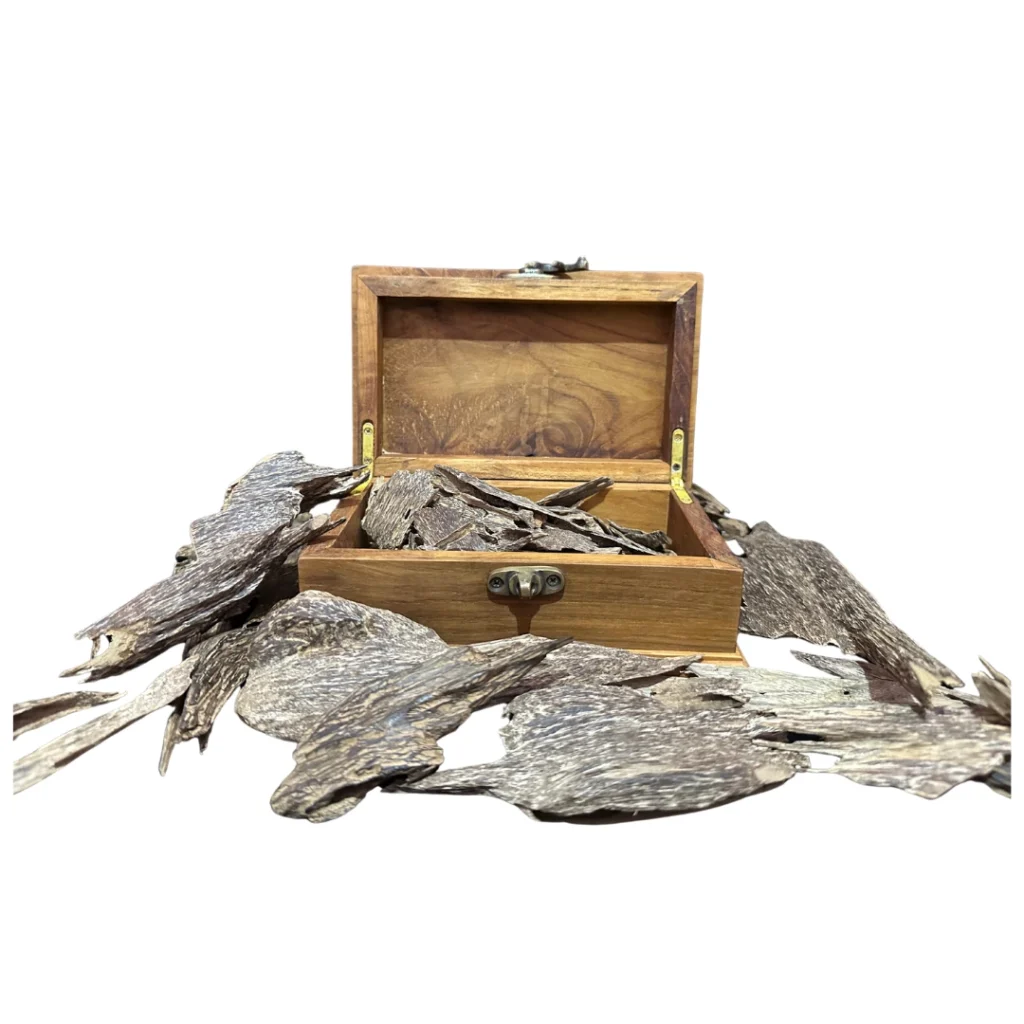
Trusted Documentation for International Agarwood Trade
Discover how export records, compliance procedures, shipment documentation, and transparent communication help buyers navigate international agarwood transactions with greater confidence.
03 — Core Regulatory Framework
CITES COMPLIANCE:
THE LEGAL ARCHITECTURE OF AGARWOOD EXPORT
CITES compliance is not self-certifying — it cannot be faked by a knowledgeable buyer or customs inspector. Every CITES permit carries a unique serial number that can be verified against the CITES Trade Database maintained by the UNEP-WCMC in Geneva. Buyers receiving a CITES-permitted shipment from Masantara Oud can verify the permit’s authenticity independently through this international database — a level of legal transparency that distinguishes properly documented trade from the significant volume of illegally or insufficiently documented agarwood that circulates in global markets.
04 — Document-by-Document Breakdown
COMPLETE EXPORT DOCUMENTATION:
EVERY DOCUMENT, EXPLAINED
A complete Masantara Oud export shipment is accompanied by a full documentation package. Each document below serves a specific legal or commercial function — together they constitute a complete, verifiable record of the transaction, the product, and the legal status of the trade.
06 — Industry Risk Intelligence
RISK FACTORS IN GLOBAL AGARWOOD TRADE
The agarwood trade has documented risk factors that buyers — particularly those making their first significant international purchase — should understand clearly. Identifying these risks is not alarmist; it is the information that allows buyers to distinguish compliant, reliable suppliers from those that create legal and financial exposure.
| Risk Category | Description | Severity | Masantara Oud Mitigation |
|---|---|---|---|
| Illegal Sourcing | Agarwood harvested from protected areas or without legal harvesting permits. Creates legal liability for the buyer as importer of illegally sourced CITES-regulated material in most destination jurisdictions. | Critical | Direct sourcing network with legal origin documentation traceable to registered forest management areas. Legal origin files maintained per batch.Legal origin certificate available |
| Fraudulent Documentation | Falsified CITES permits, counterfeit certificates of origin, or fabricated quality documents. CITES permit fraud is a documented problem in the international wildlife trade and is specifically monitored by customs authorities. | Critical | All CITES permits issued by KLHK carry unique serial numbers verifiable through the international CITES Trade Database. Buyers can independently verify permit authenticity.Database-verifiable permits |
| Grade Misrepresentation | Lower-grade or enhanced material sold as higher grade, including muhasan (artificially enhanced) wood presented as natural premium grade. Documented extensively in agarwood trade literature. | High | Grade certificate documents classification criteria applied. GC-MS analysis for oil provides independent chemical verification. Sample orders available before bulk commitment.Grade certificate + GC-MS verification |
| Customs Seizure | Shipment detained or seized at destination customs due to missing, incorrect, or expired documentation. Frequently caused by CITES permit errors, phytosanitary documentation gaps, or incorrect HS code classification. | High | Pre-shipment documentation review checklist. HS code verified per product form and destination. Destination-market customs requirements confirmed before shipment booking.Pre-shipment doc checklist completed |
| Quality Inconsistency | Second and subsequent orders differ in quality from the first — a common problem with suppliers that lack systematic QC infrastructure and rely on opportunistic sourcing rather than maintained supplier networks. | Moderate | Batch documentation system allows comparison between order cycles. Same grading criteria applied to every batch. Direct sourcing relationships provide consistent material access.Batch-to-batch documentation |
| Payment & Delivery Fraud | Payment received without delivery, or delivery of materially different goods than ordered. Most prevalent in online marketplace transactions without verified supplier credentials. | Moderate | Transparent pre-shipment inspection process with buyer notification at each stage. Shipping documents transmitted before payment release for larger orders. Sample orders available to verify product quality before volume commitment.Staged process with buyer verification points |
Strengthening Trust Through Documentation and Partnership
Discover how export records, compliance procedures, shipment documentation, and transparent communication help support international agarwood transactions and long-term business relationships.
07 — Internal Operations
THE MASTARANTARA OUD
EXPORT SYSTEM
The operational infrastructure described in this page is not a response to buyer questions — it is the baseline standard that Masantara Oud applies to every export shipment, regardless of order size, destination, or buyer relationship stage. It exists because international agarwood trade cannot be conducted professionally without it, and because the cost of documentation failure — to the buyer and to the supplier — far exceeds the operational investment required to maintain it correctly.
Our export experience spans the Middle East (Saudi Arabia, UAE, Qatar), East Asia (China, Japan, South Korea), and international markets including the United States, Europe, and Australia. Each of these destinations has distinct documentation requirements that we have navigated in practice, not just in theory. The institutional knowledge accumulated through this direct export experience — knowing which specific documents a Japanese biosecurity inspector requires, how Gulf customs handles CITES-regulated products, what the current US Fish & Wildlife Service notification requirements are for agarwood imports — is operationally valuable and directly reduces clearance risk for buyers. For the full profile of our export capabilities and track record, see the Experience & Portfolio page.
08 — B2B Collaboration
PARTNERSHIP MODEL:
THREE TYPES OF LONG-TERM COLLABORATION
- Standardised documentation package per shipment cycle
- Grade specification locked at relationship initiation — maintained across orders
- CITES permit applications initiated on order confirmation — lead time managed proactively
- Private label documentation including custom brand labelling compliance
- Advance notification of supply constraints or grade availability changes
- Dedicated account handling for documentation queries
- GC-MS analysis per batch as standard documentation
- IFRA compliance documentation for regulated markets
- Batch-to-batch comparison reports for formula stability monitoring
- Rapid response to regulatory queries from destination-market authorities
- Co-development support for origin-specific aromatic profile targeting
- Confidential sourcing arrangements for brand differentiation
- Individual-piece provenance documentation for high-value material
- Authentication support including origin and grade verification
- CITES documentation at the individual specimen level where applicable
- Discreet handling with confidential transaction documentation
- Sample and approval process before final order commitment
- Insurance documentation support for high-value consignments
The documentation and compliance infrastructure described in this page is most valuable within the context of a structured, ongoing commercial relationship rather than a single transaction. Masantara Oud’s partnership model is designed around three distinct buyer segments, each requiring a different documentation emphasis and communication structure.
09 — Process Transparency
TRANSPARENCY &
BUYER COMMUNICATION STANDARDS
At Order Confirmation: Pro forma invoice with full product specification, pricing, Incoterms, and estimated lead time including CITES permit processing timeline. Any documentation requirements confirmed explicitly at this stage.
During Processing: Notification when grading is complete with batch reference. GC-MS analysis results transmitted as available. Any material specification variance flagged immediately rather than discovered at delivery.
At Shipment: Complete documentation package transmitted digitally before physical shipment: CITES permit, phytosanitary certificate, commercial invoice, packing list, COO, grade certificate, and any additional documents agreed. Tracking number and carrier details provided on booking.
In Transit: Proactive notification of any transit delays or customs queries. Masantara Oud provides documentation support for destination customs if queries arise — the buyer does not face those authorities alone.
Post-Delivery: Confirmation of receipt requested. Any quality or documentation discrepancy raised within the agreed review period is addressed against the batch documentation record — creating a factual basis for resolution rather than a disagreement of subjective assessments.
10 — Logistics Capability
GLOBAL SHIPPING COVERAGE:
AIR & SEA FREIGHT CAPABILITIES
11 — Comparative Transparency
MASTANTARA OUD VS
THE INDUSTRY NORM
The following comparison reflects what buyers typically encounter when sourcing agarwood internationally, and what Masantara Oud’s operational standard provides. It is presented factually — not as a competitive attack on other suppliers, but as a clear statement of what professional compliance looks like in this trade.
12 — Relationship Foundation
BUILDING LONG-TERM TRUST:
THE STANDARD THAT EARNS REPEAT BUSINESS
The documentation and compliance infrastructure described in this page is the operational foundation — it enables transactions to complete legally, correctly, and verifiably. But the commercial relationships that matter most in this industry are built on top of that foundation through repeated demonstrations of the same standard, order after order.
Buyers who have transacted with Masantara Oud across multiple order cycles know, from direct experience, that the CITES permit on order ten is as complete and verifiable as the one on order one — that the grade specification agreed at the start of the relationship is the specification delivered consistently — and that documentation queries are answered factually rather than managed diplomatically. This is not a promise; it is a documented operational commitment with a paper trail that any buyer can audit.
For buyers approaching a first transaction: the appropriate starting point is a sample order, accompanied by the full documentation package described above, at a quantity that allows quality and documentation verification before a volume commitment is made. We operate a structured sample and approval process for this purpose. The investment in getting that first order right — in verifying the documentation, confirming the grade, and experiencing the communication standard — is what creates the confidence basis for the larger transactions that follow.
Regulatory References & Documentation Standards
- CITES Appendix II listing for Aquilaria and Gyrinops spp. — CITES official species database
- Non-Detriment Finding requirements for CITES Appendix II species — CITES Guidelines for NDF preparation
- Indonesian CITES Management Authority (KLHK) export permit procedures — Ministry of Environment and Forestry official documentation
- IFRA Standards for fragrance ingredients in consumer products — International Fragrance Association official guidelines
- Agarwood export documentation requirements — oudacademia.com industry reference
- Export documentation for agarwood products including chips, oil, and processed forms — putzagarwoodfarm.com industry reference
- Phytosanitary certificate requirements by destination market — Indonesian Ministry of Agriculture and IPPC standards
- CITES Trade Database — UNEP-WCMC permit verification system (trade.cites.org)
- HS Code classification for agarwood products under the Harmonised System — World Customs Organisation tariff schedule
- US Fish and Wildlife Service import requirements for CITES Appendix II species — USFWS official guidance
- EU Wildlife Trade Regulations implementing CITES — EU Council Regulation (EC) No 338/97 and implementing measures
- GC-MS analysis standards for essential oil characterisation — ISO essential oil analysis methodology
Request A Free Consultation
EVERY DOCUMENT IS
A LAYER OF PROTECTION
Masantara Oud · Export Compliance & Trade Partnership